CAF · Africa
Tunisia
Eagles of Carthage
Tunisia — the Eagles of Carthage — are North Africa's most consistent World Cup nation. Six World Cup appearances, the 2004 AFCON title on home soil, and one of African football's most memorable moments: beating France 1–0 at the 2022 World Cup. The ancient spirit of Carthage lives in every game.

🎵Hello, I am Lin!
Hello, I am Lin! Tunisia has such a rich sporting heritage — the ancient city of Carthage was one of the greatest civilisations in history, and now the Eagles of Carthage are carrying that proud tradition onto the football pitch. Beating France 1–0 at the 2022 World Cup was extraordinary — the first time an African nation had ever beaten France at a World Cup!
Quick Facts
FTF Founded
1956 — Fédération Tunisienne de Football
AFCON Title
2004 — Winners on home soil in Tunisia
World Cup Appearances
6× — most in North Africa (1978, 1998, 2002, 2006, 2018, 2022)
Registered Male Players
Approximately 400,000 registered players
Best FIFA Ranking
14th — achieved in 2018 after strong World Cup performance
Main Stadium
Stade de Radès — 60,000 capacity in Tunis
Discover Tunisia
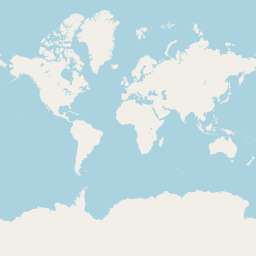
Tunisia is a small country in North Africa at the northernmost point of the African continent, bordered by Algeria to the west, Libya to the east, and the Mediterranean Sea to the north. It occupies a strategic position at the crossroads of the western and eastern Mediterranean, a location that has made it one of history's great meeting points of cultures and civilisations. The ruins of ancient Carthage — once one of the most powerful cities in the ancient world and rival to Rome — lie just outside the modern capital, Tunis.
Tunisia is a country of remarkable geographic variety for its small size — from the fertile Mediterranean coastline and the Cap Bon peninsula with its citrus groves and vineyards, to the dramatic Dorsale mountain range, the vast salt flats of the Chott el-Jerid, and the sweeping dunes of the Sahara Desert in the south. The Sahara scenes from the original Star Wars films were filmed in Tunisia, and several filming locations remain popular tourist attractions.
With a population of around 12 million people, Tunisia is the most educated and urbanised country in North Africa. The country became famous worldwide in 2010–2011 as the starting point of the Arab Spring — a series of pro-democracy uprisings that swept across North Africa and the Middle East, beginning with the Jasmine Revolution in Tunisia. Tunisia successfully transitioned to democracy before facing further challenges. Football is the most popular sport, and the Carthage Eagles are one of Africa's most consistent World Cup qualifiers.
Map of Tunisia

🌍 Where in the World
Flag of Tunisia
Tunisia's flag features a red background with a white circle at the centre containing a red crescent and a red five-pointed star. The red and white design has been used since the 19th century when Tunisia was under Ottoman rule. The crescent and star are symbols of Islam and represent the strong Islamic identity of the Tunisian people.
⚽ The History of Football in Tunisia
Football arrived in Tunisia during the French colonial era, introduced in the late 19th century. The game spread quickly in Tunis and coastal cities, and clubs began forming in the early 20th century. Tunisia declared independence in 1956, and the Fédération Tunisienne de Football was established that same year, giving Tunisian football a national identity.
Tunisia qualified for their first FIFA World Cup in 1978 in Argentina — the first African team to win a World Cup match, defeating Mexico 3–1. This historic result announced Tunisia on the world stage and set a standard of ambition that the Eagles of Carthage have maintained ever since. Tunisia became North Africa's most consistent World Cup qualifier, reaching six tournaments — more than any other North African nation.
The greatest domestic moment came in 2004. Tunisia hosted the Africa Cup of Nations and won it on home soil, defeating Morocco in the final. The entire country celebrated as one — the city of Tunis erupting in joy at their first and only AFCON title. Stars like Hatem Ben Arfa (who played for France), Youssef Msakni, and Wahbi Khazri carried the legacy forward.
At the 2022 World Cup in Qatar, Tunisia achieved something no African team had done before — they beat France 1–0. France fielded a strong side, and Tunisia's victory was not only technically impressive but historically significant. Though they did not advance from the group, their performances confirmed Tunisia as one of Africa's most technically sophisticated footballing nations, with a tradition rooted in the ancient greatness of Carthage.
Key Results
- 1978Group stage — won vs Mexico (first African WC win)
- 1998Group stage — France
- 2002Group stage — South Korea/Japan
- 2006Group stage — Germany
- 2018Group stage — Russia
- 2022Group stage — beat France 1–0 (historic!)
2022
The year Tunisia became the first African nation to beat France at a FIFA World Cup — a historic 1–0 victory.
✨ Did You Know?
Ancient Carthage
Carthage was one of the greatest ancient civilisations in history, founded near modern-day Tunis around 814 BC. The Eagles of Carthage honour this extraordinary heritage every time they take to the pitch.
First African WC Win — 1978
At the 1978 World Cup in Argentina, Tunisia became the first African team to win a World Cup match, defeating Mexico 3–1. This historic result changed perceptions of African football forever.
Beating France — 2022
At the 2022 World Cup in Qatar, Tunisia beat France 1–0 — the first time any African nation had beaten France at a World Cup. Despite not advancing, the result was celebrated across Africa.
🌟 Famous Players
Tunisia has produced technically accomplished footballers who have competed at the highest levels across Europe, Africa, and Asia.
Tarak Dhiab
1976–1990Tunisia's greatest player of the 1970s and 80s. Named African Player of the Year in 1977. A creative midfielder who played in France and Spain and was central to Tunisia's 1978 World Cup campaign.
Youssef Msakni
2010–presentA technically gifted attacking midfielder and one of the best players in Tunisian football history. Plays for Al-Arabi in Qatar. Famous for his dribbling, vision, and ability to score spectacular goals.
Wahbi Khazri
2013–presentA technically accomplished attacking midfielder who played for Bordeaux, Sunderland, Rennes, and Saint-Étienne. One of Tunisia's most experienced and influential players in the modern era.
Ali Maaloul
2011–presentOne of the best left-backs in African football. Plays for Al Ahly in Egypt, where he has won multiple African Champions League titles. His overlapping runs and quality deliveries have been key to Tunisia.
Aymen Abdennour
2010–2019A commanding centre-back who played for Monaco, Valencia, and Marseille. Brought solidity and leadership to Tunisia's defence across a decade of World Cup qualifying campaigns.
📰 Recent Events
AFCON 2021 — Cameroon
Tunisia reached the quarter-finals of AFCON 2021, showing they remain one of Africa's most competitive sides. Their technical quality and organisation were evident throughout the tournament.
FIFA World Cup — Qatar
Tunisia made history by beating France 1–0 — the first African nation to beat France at a World Cup. Despite not advancing from the group, it was a proud moment for all of Africa.
AFCON 2023 — Ivory Coast
Tunisia competed at AFCON 2023, continuing their record of qualifying for and competing at continental level. The Eagles of Carthage remain one of North Africa's most respected football nations.
FIFA World Cup Qualification
Tunisia are targeting a record seventh World Cup qualification for 2026. In an expanded 48-team tournament, the Eagles of Carthage have the quality to advance deeper than ever before.
Explore More Football Nations
Six World Cup appearances, AFCON champions on home soil, and the nation that beat France at a World Cup — Tunisia's Eagles of Carthage carry 3,000 years of history onto every pitch.