CONCACAF · North America
Mexico
El Tri — CONCACAF's Greatest
El Tri are CONCACAF's most successful and passionate team — qualifying for every World Cup since 1994 and reaching the Round of 16 seven consecutive times in a record that defined a generation. Mexico co-hosts the 2026 World Cup at the iconic Estadio Azteca, where they have a chance to finally go beyond the Round of 16 on home soil.

🎵Hello, I am Lin!
Mexico has one of football's greatest cultures! El Tri reached the World Cup quarter-finals twice as hosts in 1970 and 1986 — and reached the Round of 16 seven consecutive times from 1994 to 2018. Now they co-host the 2026 World Cup at the legendary Estadio Azteca. This is Mexico's moment!
Quick Facts
First Mexican Club
Pachuca FC — founded 1901
FMF Founded
1927 — Mexican Football Federation
Liga MX Founded
1943 — Mexico's top professional league
Registered Male Players
Approximately 2.4 million
Registered Female Players
Approximately 410,000
Professional Clubs
18 clubs in Liga MX
Discover Mexico
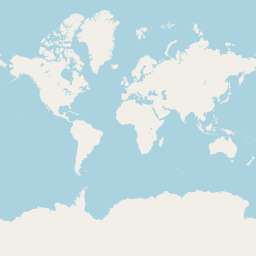
Mexico is the 13th largest country in the world and the third largest in Latin America, located in southern North America between the United States to the north and Guatemala and Belize to the south. It is a country of extraordinary geographic variety — from the deserts of Baja California and the Sierra Madre mountain ranges, to the tropical rainforests of Chiapas, the Caribbean beaches of the Yucatán Peninsula, and two vast coastlines on the Pacific Ocean and the Gulf of Mexico.
Mexico is home to some of the most spectacular ancient civilisations in world history. The Maya and Aztec empires built magnificent cities, temples, and astronomical observatories that still inspire wonder today. Chichén Itzá — the great Mayan pyramid — is one of the New Seven Wonders of the World, and the ancient city of Teotihuacán near Mexico City contains the third largest pyramid on Earth. Spanish colonisation from the 16th century created the unique blend of Indigenous and European culture that defines modern Mexico.
With a population of around 130 million people, Mexico is the most populous Spanish-speaking country in the world. Mexican cuisine — including tacos, tamales, mole, and chilli — has been recognised by UNESCO as an Intangible Cultural Heritage of Humanity. Mexico City, the capital, is one of the largest cities on Earth and a dynamic hub of culture, art, and business. Mexico is a passionate football nation and one of the three co-hosts of the 2026 FIFA World Cup.
Map of Mexico

🌍 Where in the World
Flag of Mexico
Mexico's flag features three equal vertical bands of green, white, and red, with the national coat of arms at the centre — depicting an eagle perching on a cactus and devouring a serpent. This image comes from an Aztec legend about the founding of Tenochtitlán (now Mexico City). The green represents hope, white symbolises purity, and red honours the blood of national heroes.
⚽ The History of Football in Mexico
Football arrived in Mexico in the early 1900s, brought by British workers and miners who came to work in the mines of Pachuca, Hidalgo — which is why Pachuca FC, founded in 1901, is the oldest club in Mexican football. The sport spread quickly across the country, becoming deeply embedded in Mexican culture. The Mexican Football Federation was founded in 1927 and Liga MX — one of the Americas' most entertaining leagues — launched in 1943. Mexico qualified for their first World Cup in 1930 and have been a constant presence ever since.
Mexico hosted the World Cup twice — in 1970 and 1986 — becoming only the second country ever to host the tournament twice. Both times, El Tri reached the quarter-finals, with the Azteca hosting iconic matches including the 1970 final and the 1986 "Hand of God" match between Argentina and England. The Estadio Azteca, with its capacity of 87,000, is one of the most legendary and intimidating stadiums in world football.
From 1994 to 2018, Mexico reached the Round of 16 at seven consecutive World Cups — a record no CONCACAF nation has come close to matching. However, they were eliminated in the group stage at the 2022 World Cup in Qatar, ending that celebrated streak. Now, as co-hosts of the 2026 World Cup alongside the USA and Canada, Mexico have a historic opportunity to go further than ever before — with the Azteca roaring behind them.
Key Results
- 1970🔵 Quarter-final — host (lost to Italy)
- 1986🔵 Quarter-final — host (lost to West Germany)
- 2014🔵 Round of 16 — Brazil
- 2018🔵 Round of 16 — Russia (lost to Brazil)
- 2022Group stage — Qatar (streak ended)
- 2026🏠 Co-host — USA, Canada & Mexico
7
Consecutive World Cup Rounds of 16 from 1994 to 2018 — CONCACAF's greatest sustained World Cup achievement
✨ Did You Know?
Azteca — Two World Cup Finals
The Estadio Azteca in Mexico City is the only stadium in the world to have hosted two separate World Cup finals — in 1970 (Brazil 4–1 Italy) and 1986 (Argentina 3–2 West Germany). It will host games again at the 2026 World Cup, including the final.
"El Quinto Partido" — The Fifth Game Curse
Mexico reached the Round of 16 at seven consecutive World Cups (1994–2018) — but never won that match to reach the quarter-finals. Fans called it 'el quinto partido' (the fifth game) — a psychological barrier that haunted generations of El Tri fans.
2022 — Streak Finally Ends
Mexico's remarkable run of 7 consecutive Round of 16 appearances ended at the 2022 World Cup in Qatar, where they were eliminated in the group stage on goal difference. The shock exit refocused the nation's ambition on the 2026 home tournament.
🌟 Famous Players
Mexico has produced iconic players who have graced the world's biggest stages for decades.
Cuauhtémoc Blanco
1996–2010A Mexican folk hero — a brilliant and unpredictable attacking midfielder famous for the 'cuauhtemiña' move (trapping the ball between his feet and jumping past defenders). Beloved by Mexican fans across three World Cups.
Javier Hernández
2009–2023Mexico's all-time record scorer with 52 international goals. 'Chicharito' — the Little Pea — became a global star at Manchester United and Real Madrid, finishing as Mexico's greatest ever goal scorer.
Jorge Campos
1990–2004A legendary goalkeeper famous for his outrageous, brightly coloured kits designed by himself. Campos played in three World Cups and was so athletic he sometimes played as an outfield forward — a one-of-a-kind footballing character.
Hugo Sánchez
1977–1994Mexico's greatest player of the 20th century. A prolific striker who became one of Real Madrid's all-time top scorers and won five consecutive La Liga titles in the 1980s — a Mexican who conquered the world's most glamorous club.
Guillermo Ochoa
2004–presentMexico's legendary goalkeeper and one of the most recognisable faces in Mexican sport. Appeared at five World Cups (2006–2022) and made iconic saves against Brazil in 2014 and Germany in 2018 — a giant of Mexican football.
Hirving Lozano
2016–presentThe quickest and most electric forward of Mexico's modern era. 'Chucky' Lozano lit up the 2018 World Cup by scoring the goal that beat Germany — one of the most celebrated moments in recent Mexican football history.
📰 Recent Events
FIFA World Cup — Qatar
Mexico's seven-tournament streak of reaching the Round of 16 ended in Qatar as they were eliminated in the group stage on goal difference. A painful moment for El Tri — but one that refocused the nation's ambition and hunger for 2026.
CONCACAF Gold Cup
Mexico competed in the 2023 CONCACAF Gold Cup, continuing to establish themselves as the dominant force in regional competition. The tournament provided valuable competitive fixtures as preparation for the home World Cup.
2026 World Cup Host Preparations
Mexico accelerated preparations for the 2026 World Cup, with major investment in the Estadio Azteca and other host venues. The tournament will see Mexico host matches including the final at the Azteca — the world's greatest stadium.
FIFA World Cup — Co-Host
Mexico co-hosts the 2026 World Cup alongside the USA and Canada. Playing in front of 87,000 fans at the Azteca, El Tri finally have the chance to end the 'el quinto partido' curse and go deeper than the Round of 16 on home soil.
Explore More Football Nations
Seven consecutive Rounds of 16, two World Cups hosted at the legendary Azteca, and now the 2026 home tournament. Mexico's chance to finally go beyond the quarter-final on home soil — with the whole nation behind them at the Estadio Azteca.